How to Choose the Right Roll Container for Warehouse and Retail Logistics
Choosing the right roll container can improve warehouse efficiency, simplify goods transportation, and optimize storage space. Whether used in warehouses, retail stores, distribution centers, or manufacturing facilities, roll containers provide a practical solution for daily material handling operations.
However, different applications require different configurations. Load capacity, dimensions, shelf design, caster type, and folding features all affect equipment performance. This guide explains the key factors to consider when selecting a roll container for your business.
1. Identify Your Roll Container Application
Before comparing specifications, determine how and where the roll container will be used.
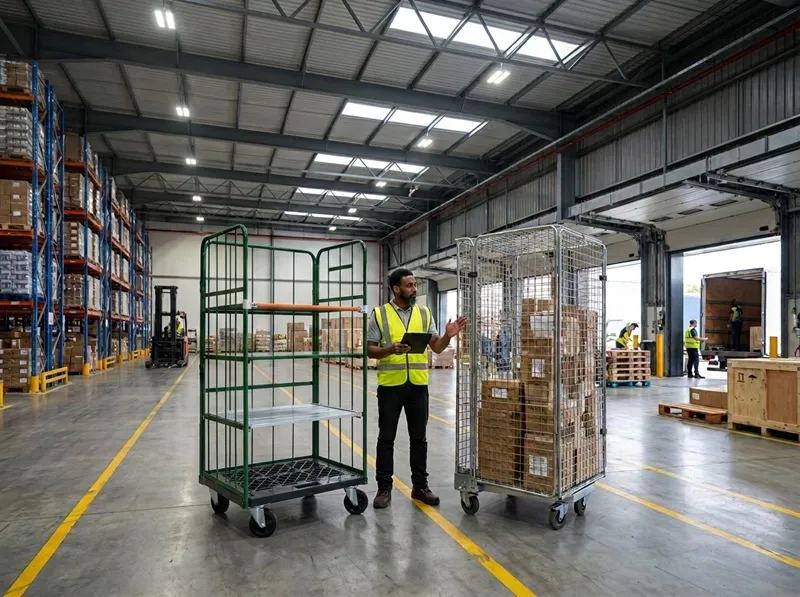
A roll container, also known as a roll cage trolley, is a wheeled cage designed to transport, organize, and temporarily store goods. Different industries have different handling requirements.
-
Warehouses: Order picking, inventory movement, and internal transportation.
-
Retail Stores: Stock replenishment, merchandise delivery, and stockroom organization.
-
Distribution Centers: Goods sorting, shipment preparation, and bulk transportation.
-
Manufacturing Facilities: Raw material handling and component transportation.
For example, retail stores may require compact, low-noise roll containers, while warehouses often prioritize higher load capacities and durable structures.
Understanding the application helps determine the most suitable equipment configuration.
2. Consider Load Capacity and Dimensions
Load Capacity
Load capacity is one of the most important factors when choosing a warehouse roll container. Equipment must safely support the weight of transported goods without compromising stability or durability.
Light-duty applications may require compact models, while heavy-duty warehouse operations typically need reinforced frames and stronger casters.
YOOLISHIN offers different roll container configurations, with certain models supporting approximately 800 lb and heavy-duty options reaching up to 1,500 lb, depending on product specifications.
When selecting load capacity, consider the maximum weight, load distribution, and frequency of use. For multi-shelf models, check both the total rated capacity and individual shelf limits.
Dimensions and Shelf Configuration
The roll container should fit the available working space, including warehouse aisles, doorways, elevators, and loading areas.
External dimensions determine maneuverability, while internal dimensions define usable loading space. Compact models are generally more suitable for narrow retail aisles, whereas larger containers can improve transportation efficiency in distribution centers.
Shelf configuration is equally important. Fixed shelves provide consistent storage layouts, while removable or adjustable shelves offer greater flexibility for different products.
Depending on the application, plastic shelves, steel shelves, or customized configurations may be appropriate.
3. Compare Different Roll Container Designs
Different roll container structures are designed to meet specific logistics requirements.
Foldable and Stackable Roll Containers
A foldable roll container helps reduce storage space when equipment is empty. After unloading, the container can be folded for more efficient storage and return transportation.
Stackable roll containers provide similar space-saving benefits by allowing compatible empty units to be stacked or nested.
These designs are particularly useful for retail distribution, warehouse operations, and businesses managing large fleets of handling equipment.
Security Roll Containers
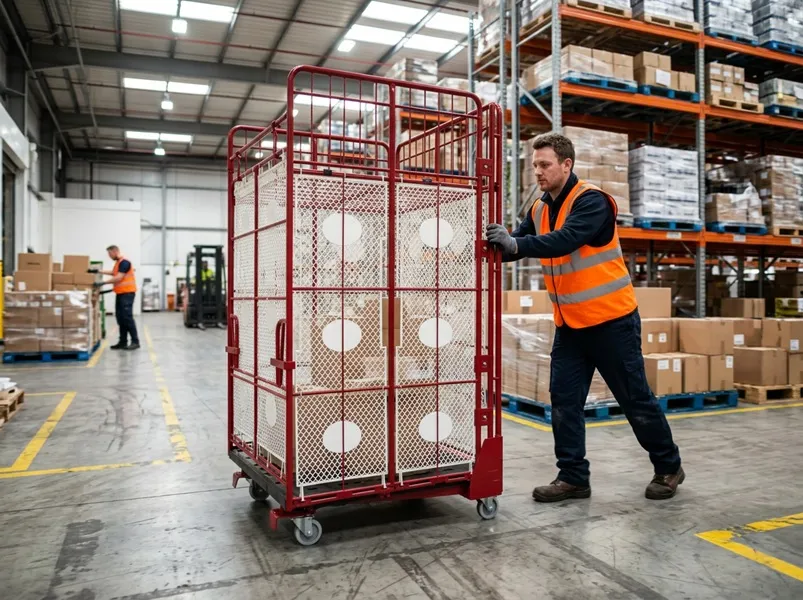
A security roll container typically features an enclosed cage structure with doors and optional locking mechanisms.
It provides additional protection for valuable merchandise, controlled inventory, and goods requiring secure transportation between facilities.
Silent Roll Containers
Noise control is important in supermarkets, hospitals, hotels, and other environments where equipment operates near customers or staff.
Silent roll containers use suitable caster materials and noise-reducing designs to support quieter movement.
YOOLISHIN's LRC-RS series is designed for low-noise material handling, including RS50P, RS60P, and RS80P models with different size and loading configurations.
Selecting the appropriate model depends on the operating environment, available space, and transportation requirements.
4. Choose the Right Casters
Casters directly influence maneuverability, operating noise, and handling stability.
Common caster options include:
-
Swivel Casters: Improve maneuverability in narrow spaces.
-
Fixed Casters: Provide directional stability during straight-line movement.
-
Braked Casters: Help prevent unintended movement when parked.
-
Rubber Casters: Offer smoother, quieter movement on suitable surfaces.
-
Polyurethane Casters: Provide durability and rolling performance for various industrial applications.
Wheel diameter and material should match the floor conditions and expected load. For frequent transportation, selecting appropriate casters can improve handling efficiency and reduce maintenance requirements.
5. Match Roll Container Features to Your Business
The best roll container is not necessarily the largest or strongest model. It should match the actual operating requirements.
|
Application |
Recommended Features |
|---|---|
|
Retail Replenishment |
Compact size, foldable design, low-noise casters |
|
Warehouse Transportation |
Durable frame, suitable load capacity, easy maneuverability |
|
Distribution Logistics |
Foldable or stackable structure, efficient loading |
|
Valuable Goods Handling |
Enclosed cage, security doors, locking options |
|
Noise-Sensitive Environments |
Silent casters, smooth rolling performance |
When comparing models, consider transportation frequency, available storage space, maintenance requirements, and long-term operating costs.
Selecting equipment based on actual workflow requirements can help improve efficiency and avoid unnecessary investment.
6. Consider OEM and ODM Customization
Standard roll containers may not meet every business requirement. Companies handling specialized products or operating in unique environments may benefit from customized solutions.
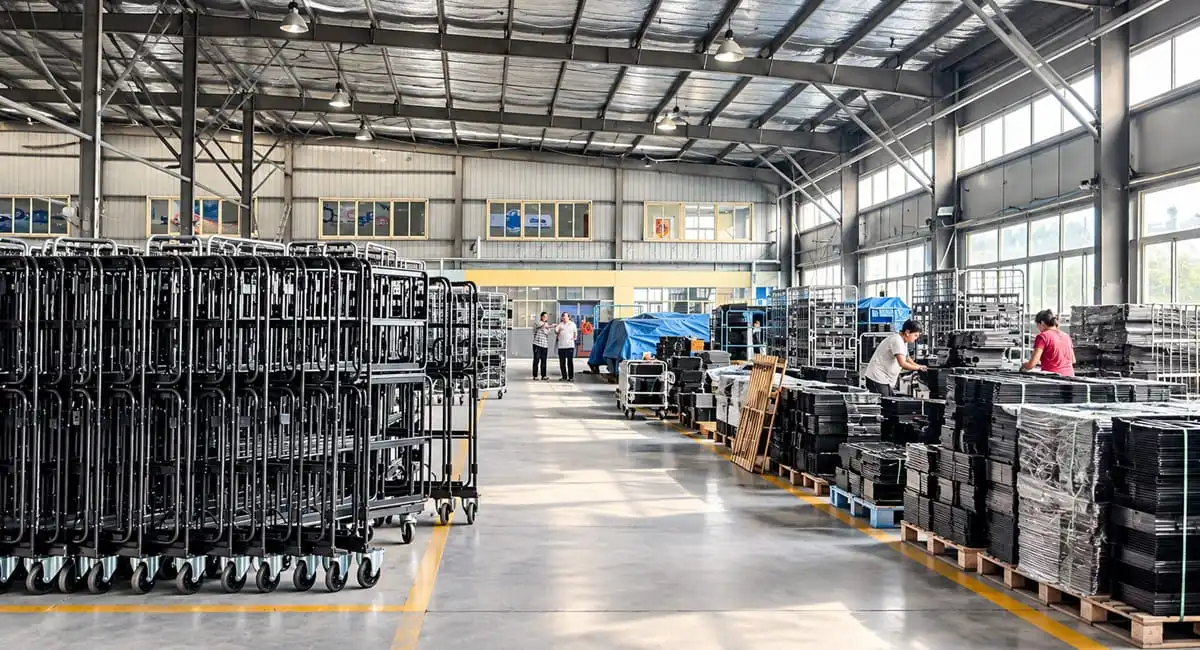
As a roll container manufacturer, YOOLISHIN provides OEM and ODM services to support different material handling applications.
Customization options include:
-
Dimensions and Structure: Customized sizes, cage designs, doors, and shelf configurations.
-
Materials and Load Capacity: Material selection and structural reinforcement.
-
Casters and Surface Treatment: Wheel configurations, caster materials, and surface finishes.
-
Branding and Packaging: Custom colors, logos, labels, and export packaging.
For distributors, wholesalers, logistics companies, and equipment brands, customized roll containers can provide better compatibility with existing operations.
When requesting a quotation, buyers should provide the intended application, required dimensions, load capacity, preferred configuration, and estimated order quantity.
Conclusion
Choosing the right roll container requires careful consideration of load capacity, dimensions, structural design, casters, and operating conditions. Foldable, stackable, security, and silent models each offer advantages for different warehouse and retail logistics applications.
YOOLISHIN provides a range of roll containers and OEM/ODM customization services to meet different material handling requirements.
Explore our Roll Containers or contact YOOLISHIN to discuss your specific needs and find a suitable solution for your business.