The Role of Material Handling Equipment in Modern Warehouse Logistics
Efficient warehouse operations depend on more than storage capacity. Goods must move smoothly between receiving, storage, picking, packing, and shipping areas. As order volumes increase and delivery requirements become more demanding, businesses need reliable material handling equipment to support daily logistics activities.
From roll containers and hand trucks to plastic pallets and mobile shelving systems, different types of equipment help streamline transportation, improve warehouse organization, and optimize available space.
This article explores the role of material handling equipment in modern warehouse logistics, its major applications, and how businesses can select suitable solutions for their operations.
1. Why Material Handling Equipment Matters in Warehouse Logistics
Material handling refers to the movement, storage, protection, and control of goods throughout warehouse and logistics operations. It covers every stage, from receiving incoming materials to preparing finished products for shipment.
Without suitable equipment, workers may spend excessive time carrying cartons, moving heavy loads, or transferring products between workstations. Repeated manual handling can increase labor requirements, slow down operations, and create potential safety risks.
Warehouse material handling equipment helps address these challenges by providing practical tools for moving and organizing goods.
Its main benefits include:
-
Improved Handling Efficiency: Move multiple items in fewer trips and reduce unnecessary manual transportation.
-
Better Warehouse Organization: Keep goods, tools, and materials arranged for easier access.
-
Optimized Space Utilization: Use suitable storage equipment to make better use of available floor space.
-
Reduced Manual Handling: Minimize repetitive lifting and support safer goods transportation.
-
Greater Operational Flexibility: Adapt equipment configurations to different products and workflows.
The right equipment should support the entire material flow rather than only one individual operation.
2. Common Types of Material Handling Equipment and Their Applications
Different warehouse environments require different equipment. Understanding the functions of each product helps businesses select appropriate solutions.
Roll Containers for Goods Transportation
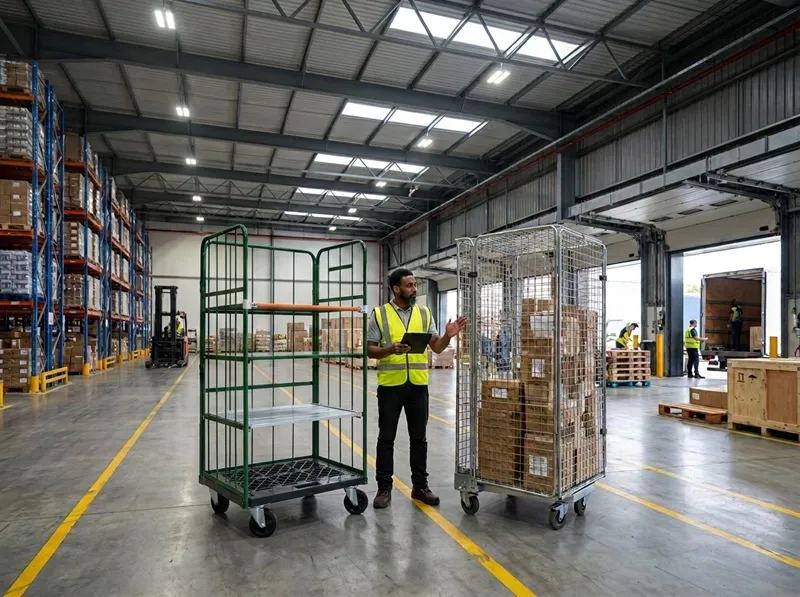
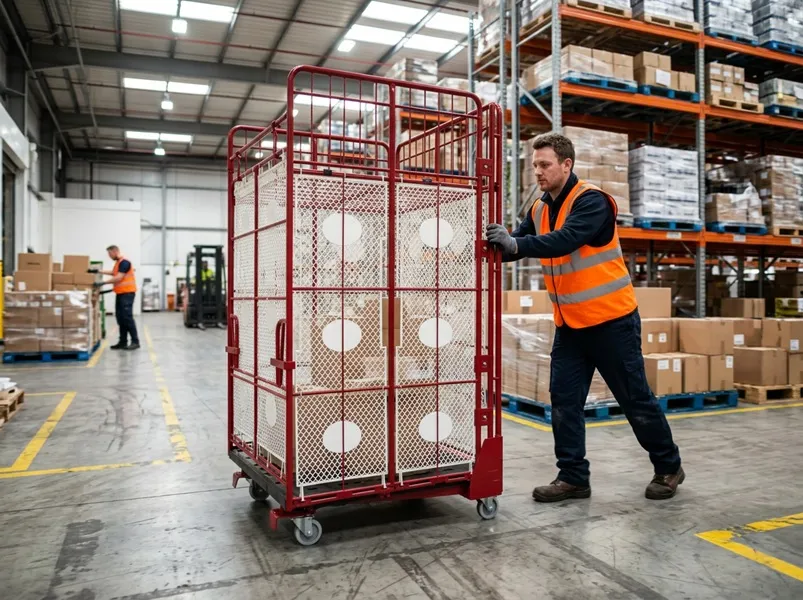
Roll containers, also known as roll cage trolleys, are widely used for transporting cartons, packaged products, and merchandise within warehouses and distribution facilities.
Their wheeled cage structures allow goods to be loaded, moved, and temporarily stored with less repeated handling.
Different designs support specific requirements:
-
Foldable Roll Containers: Reduce storage space when empty and support return logistics.
-
Stackable Roll Containers: Improve space utilization when storing compatible empty units.
-
Security Roll Containers: Provide enclosed structures and optional locking features for valuable goods.
-
Silent Roll Containers: Support quieter transportation in supermarkets, hotels, and other noise-sensitive environments.
Roll containers are particularly useful for retail replenishment, warehouse picking, and distribution operations.
Hand Trucks and Platform Trolleys
Hand trucks provide a practical solution for moving cartons, packages, and individual heavy items over short distances.
They are commonly used in warehouses, factories, delivery areas, and retail stockrooms. Different frame designs, load capacities, and wheel configurations accommodate various transportation requirements.
Platform trolleys are suitable for moving larger, heavier, or irregularly shaped goods. Their flat loading surfaces provide flexibility when transporting multiple cartons or equipment that may not fit inside a roll cage.
Both options help reduce repeated lifting and improve internal transportation efficiency.
Tool Carts and Turnover Boxes
Tool carts are commonly used in manufacturing, assembly, and maintenance environments. They help organize tools and components, allowing workers to access necessary items more efficiently.
Turnover boxes, including reusable plastic crates, are designed for storing, sorting, and transporting smaller parts and materials.
They can support organized material flow between production processes and warehouse areas. Stackable designs also help reduce storage space requirements when compatible boxes are used.
Plastic Pallets and Mobile Shelving Systems
Plastic pallets provide reusable platforms for goods storage and transportation. They can support palletized handling, warehouse organization, and repeated logistics operations.
For businesses requiring higher storage density, electric mobile shelving systems offer another solution.
Unlike conventional fixed shelving, mobile shelving units move along designated tracks, allowing access aisles to be opened where needed.
This design can reduce the number of permanent aisles and increase storage capacity within the same floor area.
Mobile shelving can be particularly useful in facilities where storage space is limited or expensive, including certain cold storage environments when appropriately designed.
3. How Material Handling Equipment Improves Warehouse Efficiency
Selecting suitable equipment can improve several aspects of warehouse operations.
Streamlining Internal Transportation
Warehouses often require goods to move repeatedly between receiving, storage, picking, and shipping areas.
Roll containers and trolleys allow workers to transport multiple items together, reducing unnecessary trips.
For example, a roll container can hold several cartons during order picking and move them directly to a sorting or dispatch area.
This simplifies internal transportation and helps maintain a more consistent workflow.
Improving Storage Space Utilization
Efficient storage is essential for warehouses handling large product volumes.
Foldable roll containers reduce the space occupied by empty equipment, while stackable turnover boxes and pallets support more organized storage arrangements.
Mobile shelving systems can further improve storage density by reducing fixed aisle requirements.
However, the most suitable solution depends on the warehouse layout, inventory characteristics, and access frequency.
Supporting Workplace Safety and Organization
Appropriate material handling equipment can help reduce unnecessary manual lifting and improve load stability during transportation.
Equipment should be selected according to load weight, floor conditions, and operating requirements.
Features such as suitable casters, stable frames, braking systems, and appropriate load capacities contribute to safer handling.
Well-organized equipment also helps keep working areas clear and supports more efficient daily operations.
4. How to Choose the Right Warehouse Material Handling Equipment
Choosing equipment requires an understanding of both product characteristics and warehouse operations.
Before purchasing, businesses should evaluate several factors.
Load Capacity and Product Dimensions
Equipment must safely accommodate the weight and dimensions of the goods being handled. Maximum loads, weight distribution, and loading frequency should all be considered.
Warehouse Layout and Transportation Distance
Aisle width, door dimensions, floor conditions, and travel distances influence equipment selection. Compact trolleys may be more suitable for narrow spaces, while larger roll containers can support higher-volume transportation.
Storage and Handling Requirements
Consider whether equipment needs to be foldable, stackable, lockable, or equipped with adjustable shelves.
Operating Environment
Indoor warehouses, outdoor loading areas, retail stores, and cold storage facilities may require different materials, wheel configurations, or surface treatments.
Durability and Maintenance
Equipment should withstand repeated use under its intended operating conditions. Durable structures, suitable casters, and accessible replacement components can help reduce long-term maintenance requirements.
Evaluating these factors helps businesses select equipment that matches their actual workflow rather than purchasing based solely on price.
5. The Growing Importance of Flexible and Customized Solutions
As warehouse operations become more diverse, standardized equipment may not always meet specific handling requirements.
Different industries have different product dimensions, load requirements, storage layouts, and operating conditions.
This creates growing demand for flexible material handling solutions and OEM/ODM customization.
Common customization requirements include:
-
Dimensions and structural configurations
-
Materials and load-bearing capacity
-
Shelf arrangements and caster specifications
-
Surface finishes and product colors
-
Logos, private labels, and export packaging
Customization allows distributors, wholesalers, equipment brands, and warehouse operators to source products that better match their applications.
Durability and reusability are also important considerations. Long-lasting equipment, reusable containers, and space-saving designs can help businesses reduce unnecessary replacement and improve resource utilization.
6. Material Handling Solutions from YOOLISHIN
As a material handling equipment manufacturer, YOOLISHIN provides a range of products for warehouse logistics, retail distribution, manufacturing, and commercial applications.
Its product portfolio includes roll containers, hand trucks, tool carts, turnover boxes, plastic pallets, and electric mobile shelving systems.
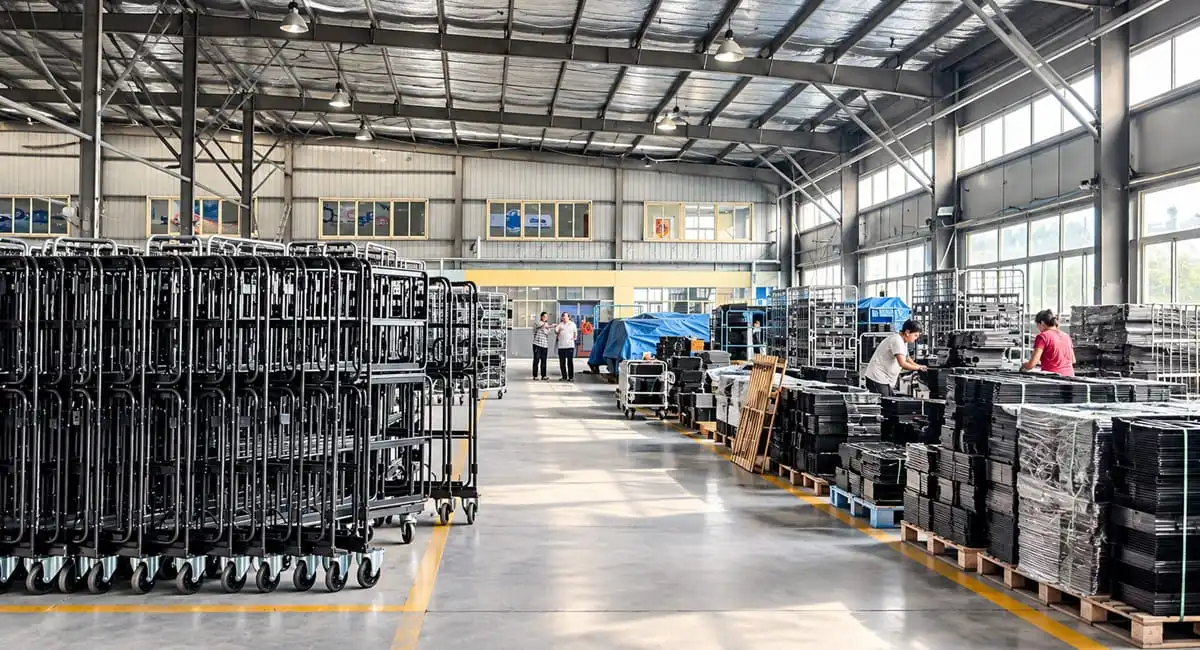
With manufacturing capabilities covering metal fabrication, plastic injection molding, and assembly, YOOLISHIN supports OEM and ODM requirements for different material handling applications.
Customers can explore customized dimensions, structures, materials, casters, branding, and packaging based on their operational needs.
Whether sourcing standard warehouse equipment or developing customized handling solutions, selecting an experienced manufacturer can help ensure product suitability and consistent supply.
Conclusion
Material handling equipment plays an essential role in modern warehouse logistics by supporting efficient goods transportation, organized storage, and flexible daily operations.
Roll containers, hand trucks, platform trolleys, plastic pallets, and mobile shelving systems each serve different purposes. Choosing the right combination depends on warehouse layout, product characteristics, handling frequency, and storage requirements.
YOOLISHIN provides practical material handling equipment and OEM/ODM customization services to support different logistics applications.
Explore our material handling products or contact YOOLISHIN to discuss your warehouse equipment requirements.